Inside a Casting Foundry: The Soul of Metal Manufacturing
Deep inside a metal casting facility, processes unfold that are vital to metalworking industries. Industrial furnaces transform alloys into liquid forms, while trained workers manage detailed casting molds. Automated systems serve a critical function, boosting productivity and sustainable practices. Still, the field faces numerous challenges that could impact its future. Analyzing these elements uncovers more than mere manufacturing processes; it illuminates a intricate relationship of tradition and innovation. What the future holds for this indispensable industry?
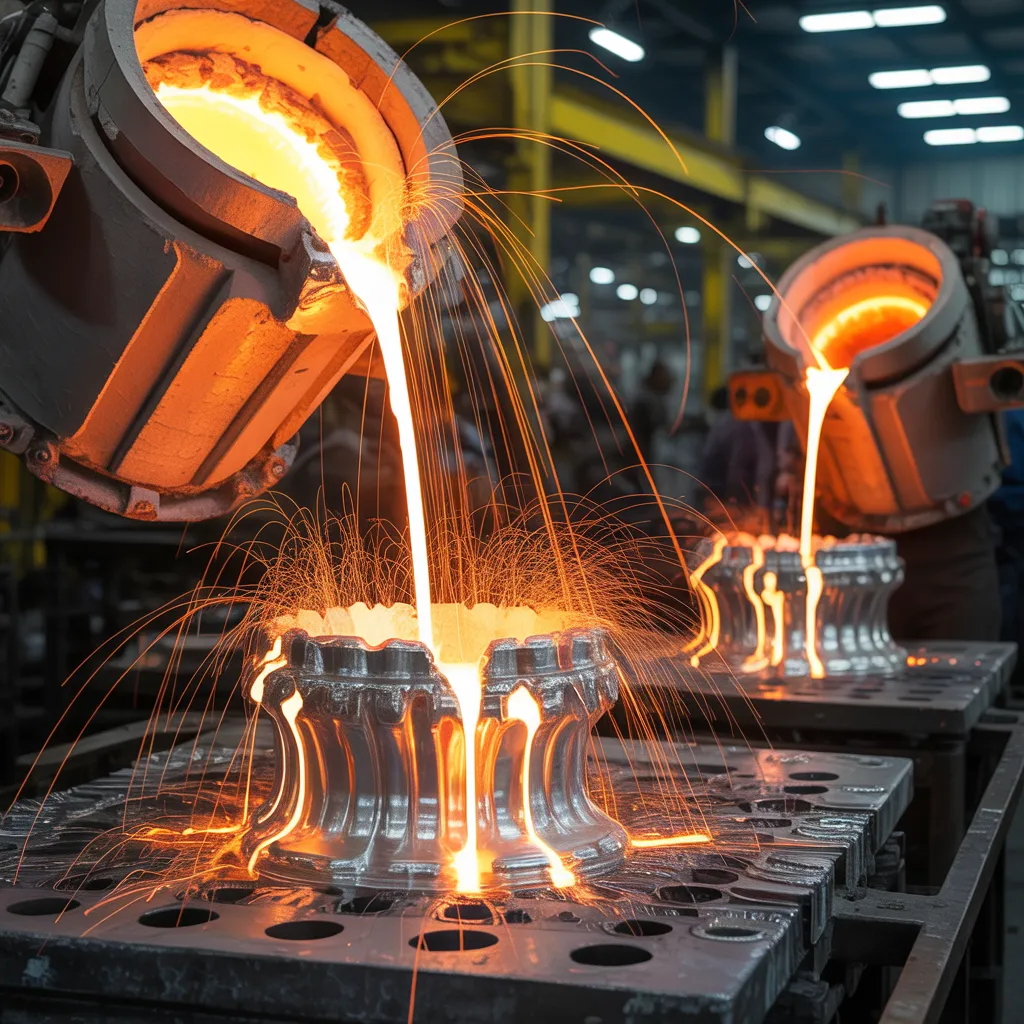
The Basics of Metal Casting
Metal casting functions as a core process in industrial production, changing molten metal into solid components. This technique has been employed for centuries, enabling artisans and manufacturers to produce components with intricate shapes and precise dimensions. The technique commences with identifying suitable metal alloys, which are afterward heated and melted at high temperatures.
Once molten, the metal is poured into molds created to form the final product. Such molds can be constructed from different materials, including sand, ceramic, and metal, based on the necessary specifications and manufacturing volume.
After the metal cools and solidifies, the mold is taken away, exposing the cast object. This technique offers notable benefits, such as minimized material waste and the capacity to manufacture complex geometries that would be challenging to achieve through other manufacturing techniques. Understanding these basics is vital for understanding the value of metal casting in today's industry.
Core Processes in Metal Casting: Melting, Molding, and Refinement
The art of metal casting unfolds through three critical processes: melting, forming, and finishing. Initially, metal is placed in a furnace and heated until it reaches a molten state, allowing for easier manipulation. This melting stage is essential, as it directly influences the quality of the end result.
Following this step, the melted metal is directed into molds, which form it into particular shapes. The selection of casting material—including options such as sand, metal, or ceramic—affects the casting's surface texture and geometric accuracy.
Finally, refinement encompasses allowing the cast metal to cool and solidify, with subsequent processes such as machining, polishing, or heat treatment to improve its mechanical characteristics. This stage guarantees that the final product meets strict quality standards and precise specifications. All of these procedures are critical, contributing to the overall efficiency and effectiveness of metal casting, ultimately leading to superior components serving a wide range of industries.
Breakthroughs in Today's Foundry Industry
As the foundry field progresses, innovations are reshaping traditional practices, boosting performance and eco-conscious operations. Developments in modern technology, such as 3D printing, are revolutionizing mold production, allowing for complex designs and reduced lead times. This technique not only cuts down on waste but also promotes personalization, fulfilling unique customer needs more efficiently.
Furthermore, the integration of robotic automation optimizes production processes, improving operational efficiency and lowering human error rates. Smart manufacturing technologies, including IoT-enabled sensors, offer live data analytics, allowing precise monitoring of operations and predictive maintenance.
Furthermore, environmentally friendly methods and materials are increasingly being adopted, decreasing the environmental impact of metal casting. The adoption of recycled metals and energy-saving smelting systems exemplifies a transition towards more environmentally responsible operations, aligning with global green initiatives. These breakthroughs combined help shape a more dynamic and responsible foundry industry, ready to address emerging challenges while fulfilling the changing demands of the industry.
What Challenges Do Casting Foundries Face?
What challenges do casting foundries face in an constantly changing industry? One primary difficulty involves the fluctuation in raw material costs, which can severely impact production budgets. Moreover, environmental regulations are getting progressively stricter, requiring foundries to adopt cleaner technologies to lower emissions important information and reduce waste. This transition demands significant capital investment, which can strain smaller operators.
Furthermore, foreign manufacturer competition often leads to pricing challenges, making it difficult for home-based foundries to preserve financial viability. Foundries must also contend with accommodating quickly evolving technological innovations, such as digitalization and automated processes, which call for ongoing training and investment.
Finally, disruptions within the supply chain, made worse by global events, represent a persistent threat, disrupting the on-time delivery of parts and raw materials. Collectively, these challenges require casting foundries to be agile and innovative to thrive in a competitive market environment.
The Significance of Skilled Labor in Casting Foundries
As automation and technology keep reshaping the industrial sector, skilled labor remains a cornerstone of operations in foundry operations. The intricate nature of foundry work requires a depth of knowledge that automated systems cannot fully achieve. Experienced professionals have the capability to evaluate detailed specifications, choose suitable alloys and compounds, and address problems that occur during the manufacturing workflow. Their real-world knowledge is indispensable for ensuring quality control and precision, particularly in high-stakes projects that call for strict tolerances.
In addition, skilled workers play a vital role in overseeing and improving equipment, guaranteeing that production operates seamlessly and effectively. As casting methods develop, these professionals are also responsible for adjusting and improving methods, merging cutting-edge technologies while upholding established craftsmanship. Within this evolving landscape, the synergy between skilled labor and technological advancements is critical for maintaining the standards and dependability that characterize thriving casting foundries.
Upcoming Trends in Casting: What Lies Ahead for the Industry?
New advancements in the foundry sector are poised to reshape its future, fueled by advancements in technology and changing industry needs. Automation and artificial intelligence are progressively optimizing manufacturing workflows, boosting precision and reducing labor costs. In addition, the adoption of 3D printing technology is revolutionizing mold creation, allowing for more complex designs and shorter production timelines.
Sustainability is emerging as a key priority as organizations work to lessen their ecological footprint. This encompasses the use of recycled materials and the adoption of energy-efficient processes across foundries. Furthermore, the rising demand for lightweight materials, notably in the automotive and aerospace fields, is spurring new innovations in alloy formulation.
The sector is also experiencing a movement in the direction of digitalization, as IoT technologies facilitate real-time monitoring and predictive maintenance. As these trends converge, the casting field is poised to witness considerable advancements, positioning itself to meet the demands of an evolving worldwide environment.
Commonly Asked Questions
What Types of Metals Are Commonly Cast in Foundries?
Metals commonly cast in foundries include aluminum, iron, steel, bronze, and brass. Each metal possesses unique properties, rendering them ideal for a wide range of applications, ranging from automotive parts to ornamental pieces, demonstrating the adaptability of casting processes.
What Are the Environmental Impacts of Metal Casting?
The metal casting process affects the environment through energy consumption, waste generation, and emissions. This process can lead to pollution of air and water, while also requiring substantial resources, prompting the need for eco-friendly practices and technologies in the field.
What Safety Protocols Are Established for Foundry Workers?
Foundries employ various safety precautions, including protective gear, ventilation systems, routine training programs, and strict adherence to established safety standards. Such protocols serve to limit potential dangers and provide a protected workplace setting for every worker.
How Are Casting Defects Identified and Corrected?
Casting flaws are detected using visual reviews, dimensional measurements, and non-destructive analysis methods. Addressing these issues involves refining processes, correcting imperfections, or performing re-casting when required to guarantee quality and adherence to specifications.
What Does a Standard Casting Production Timeline Look Like?
A standard production schedule for a casting includes a number of stages: pattern creation, mold making, pouring, cooling, and finishing. This procedure typically spans from a few days to several weeks, depending on complexity and production volume.
Comments on “Power Generation Aluminum Casting: Industrial Reliability for Energy Plants”